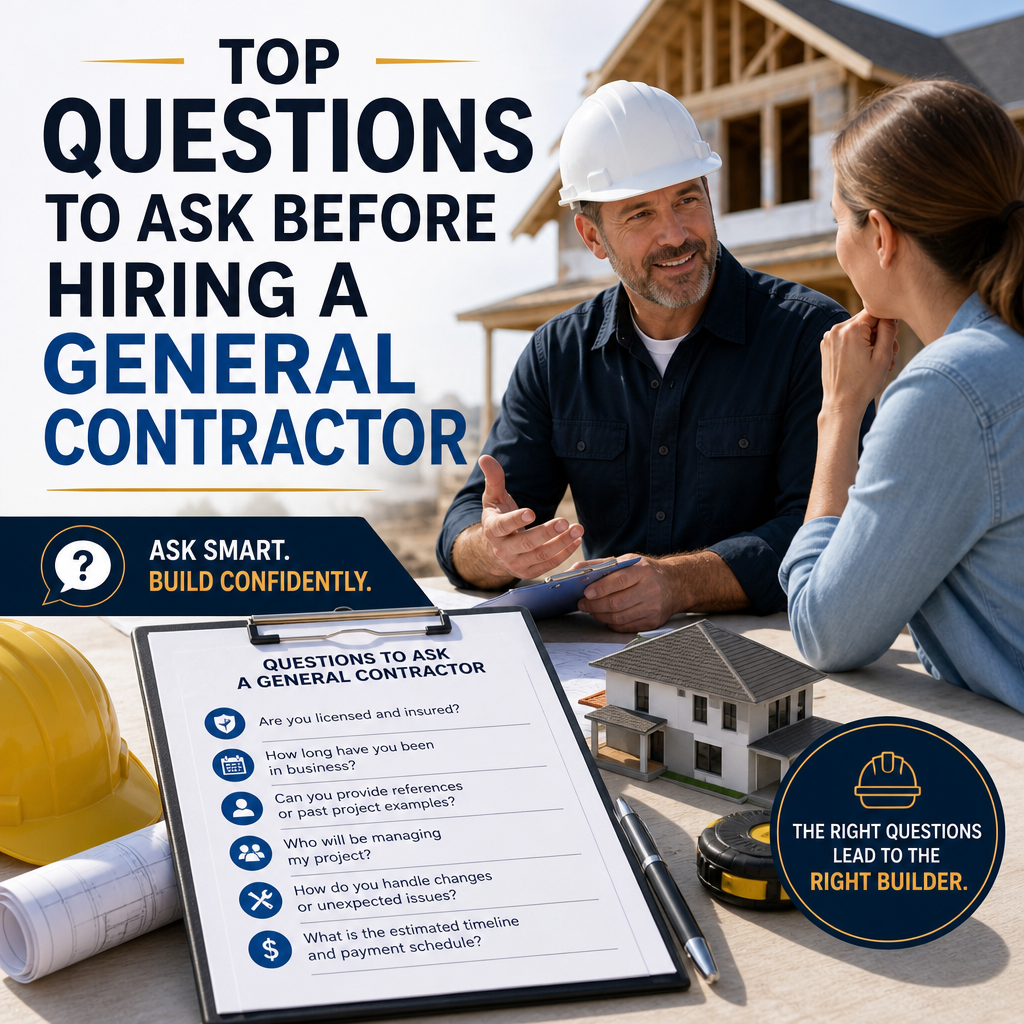
Top Questions to Ask Before Hiring a General Contractor
Top Questions to Ask Before Hiring a General Contractor
Hiring a general contractor is a major decision, whether you are planning a kitchen remodel, home addition, renovation, or new construction project. The right contractor can keep your project organized, on budget, and moving forward. The wrong choice may lead to delays, unexpected costs, and poor workmanship.
Before signing a contract, take time to interview potential contractors and ask detailed questions. Their answers can help you evaluate their experience, communication style, reliability, and suitability for your project.
Are You Licensed and Insured?
A reputable general contractor should have the licenses required by your city or state. Licensing requirements vary by location, so verify the contractor’s credentials with the appropriate licensing authority.
You should also ask whether the contractor carries:
- General liability insurance
- Workers’ compensation insurance
- Automobile insurance for company vehicles
- Bonding, when required
Request proof of current insurance rather than relying only on a verbal answer. Proper coverage protects you from financial responsibility if someone is injured or property is damaged during the project.
How Much Experience Do You Have With Similar Projects?
Experience matters, especially when your project involves structural changes, specialized materials, or complex permitting requirements. Ask how long the contractor has been in business and whether they have completed projects similar to yours.
Ask to see a portfolio of recent work and request references from past clients. When contacting references, ask about:
- Work quality
- Adherence to the schedule
- Communication
- Budget management
- Cleanliness and professionalism
- How the contractor handled unexpected problems
A contractor with relevant experience is more likely to anticipate challenges and offer practical solutions.
Who Will Manage the Project?
Some general contractors personally supervise each project, while others rely on project managers or site supervisors. Find out who will be your primary contact and who will be present at the job site.
Ask how often the contractor or supervisor will visit and how updates will be communicated. Establishing expectations early can prevent confusion and make it easier to address questions as the work progresses.
You should know:
- Who approves changes
- Who schedules subcontractors
- Who answers technical questions
- How frequently progress updates are provided
- How urgent issues are handled
Will You Obtain the Necessary Permits?
Many renovation and construction projects require building, electrical, plumbing, or zoning permits. Ask whether the contractor will handle the permitting process and inspections.
A professional contractor should understand local requirements and include permit responsibilities in the written agreement. Avoid anyone who suggests skipping permits to save money or time. Unpermitted work can create safety concerns, fines, insurance complications, and difficulties when selling your property.
Can You Provide a Detailed Written Estimate?
A detailed estimate should explain how the contractor arrived at the total price. It should separate labor, materials, equipment, permits, and other relevant costs.
Ask whether the estimate is fixed or subject to change. You should also clarify which items are allowances, such as fixtures or flooring, because choosing more expensive products may increase the final cost.
Be cautious of unusually low bids. A low estimate may omit important work, use inferior materials, or leave out costs that appear later as change orders.
What Is the Payment Schedule?
Discuss payment terms before work begins. A professional contractor should provide a clear schedule tied to project milestones rather than demanding the entire amount upfront.
Ask about:
- Required deposits
- Progress payments
- Final payment requirements
- Accepted payment methods
- Retainage, if applicable
Make sure the payment schedule matches the written contract. Never make large cash payments without documentation, and keep records of every payment.
How Do You Handle Changes and Unexpected Problems?
Construction projects sometimes require changes because of design updates, material availability, or hidden conditions discovered during demolition. Ask how change orders are documented and approved.
A proper change order should describe the adjustment, explain its effect on the price and schedule, and receive written approval before the additional work begins. This process helps prevent disputes and unexpected bills.
What Is the Expected Timeline?
Ask when the project can start and how long it is expected to take. A reliable contractor should be able to provide a realistic schedule, although weather, inspections, supply delays, and unforeseen conditions may affect the completion date.
Ask how delays are communicated and whether the contract includes procedures for extending the schedule. Clear expectations can help you plan around temporary disruptions to your home or business.
Are You Comfortable Providing a Written Contract?
Never rely on a verbal agreement for a major construction project. The contract should include the scope of work, materials, pricing, payment schedule, timeline, insurance information, warranties, and procedures for handling changes or disputes.
Read the entire agreement carefully before signing. If any section is unclear, request an explanation or consult a qualified professional.
Make an Informed Hiring Decision
Asking the right questions before hiring a general contractor helps you compare candidates and recognize potential warning signs. Look for someone who communicates clearly, provides thorough documentation, has relevant experience, and is willing to discuss concerns openly.
The best contractor is not always the one with the lowest bid. Choose a professional who demonstrates reliability, transparency, and a clear commitment to completing quality work.