
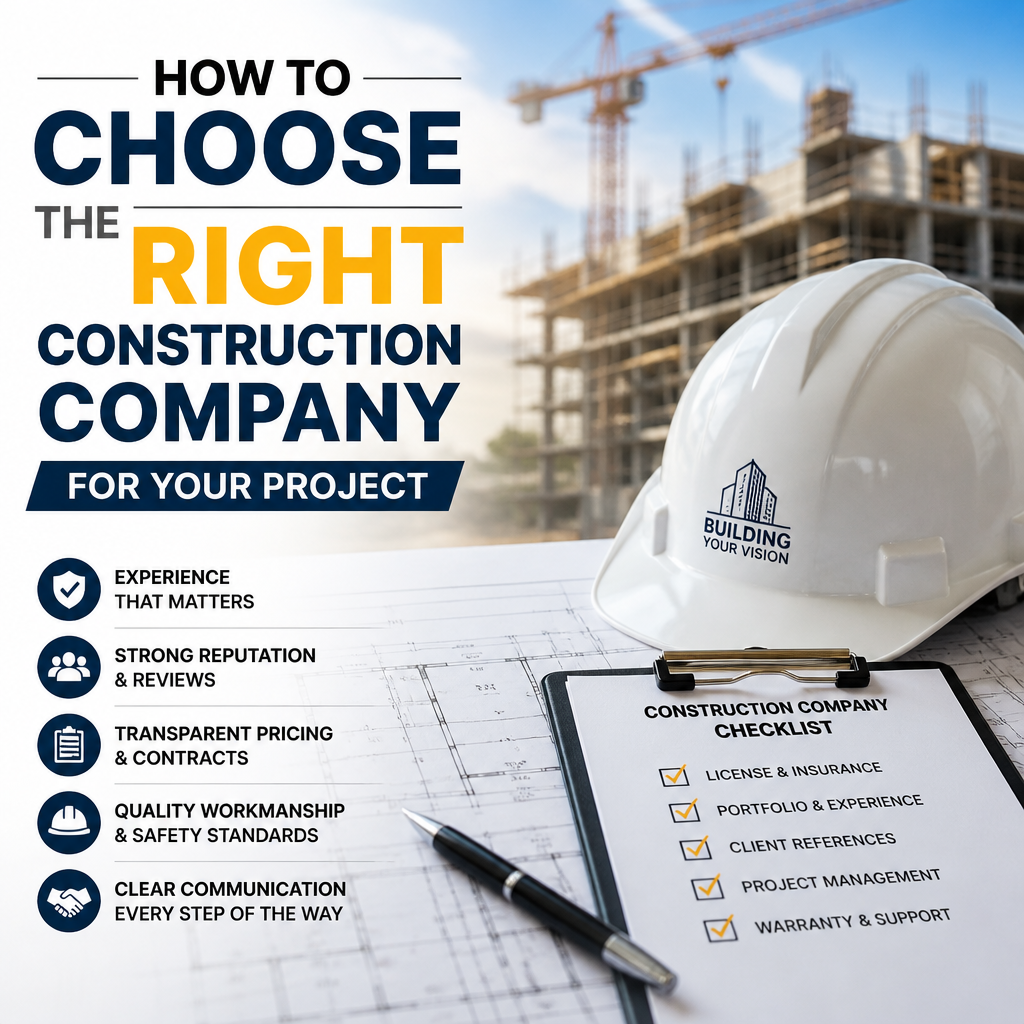
How to Choose the Right Construction Company for Your Project
The Complete Guide to Choosing a Construction Company for Your Project
Choosing the right construction company can determine whether your project is completed smoothly, on budget, and to a high standard. Whether you are planning a home renovation, commercial development, or new construction, the right contractor brings experience, organization, and clear communication to every stage.
This guide explains what to look for before signing a contract.
Define Your Project Requirements
Before contacting construction companies, clarify what your project involves. A detailed understanding of your goals will help you compare contractors more accurately.
Consider the following:
- The type and size of the project
- Your preferred completion date
- Your overall budget
- Required materials and finishes
- Design plans, permits, or architectural drawings
- Any special requirements, such as energy efficiency or accessibility
If your plans are incomplete, look for a company that offers design-build services or can work closely with architects and engineers. Clear project requirements also reduce the likelihood of unexpected costs later.
Research Local Construction Companies
Start by creating a shortlist of reputable construction companies in your area. Ask friends, colleagues, neighbors, or industry professionals for recommendations. Online reviews and local business directories can also help you identify potential contractors.
When researching each company, review:
- Years of experience
- Previous projects
- Areas of specialization
- Customer reviews and testimonials
- Professional memberships
- Licensing and registration details
Look for companies with experience similar to your project. A contractor who specializes in large commercial buildings may not be the best choice for a small residential renovation, and vice versa.
Verify Licenses, Insurance, and Qualifications
Never hire a construction company without confirming its credentials. Licensing requirements vary by location, but a qualified contractor should be able to provide proof of the necessary licenses and registrations.
You should also verify that the company carries appropriate insurance, including:
- General liability insurance
- Workers’ compensation insurance
- Vehicle and equipment coverage
- Professional liability insurance, when applicable
Insurance protects you from financial responsibility if property damage, injuries, or other problems occur during construction. Ask for current certificates and contact the insurance provider if verification is needed.
Review Previous Work
A contractor’s past work can reveal a great deal about its quality, reliability, and attention to detail. Ask to see photographs, project portfolios, or completed sites similar to yours.
When reviewing previous projects, consider:
- The quality of workmanship
- Consistency of finishes
- Creativity and problem-solving
- How well the work matches the original plans
- Whether projects appear complete and properly maintained
If possible, speak with former clients. Ask whether the construction company met deadlines, stayed within budget, handled changes professionally, and communicated effectively.
Request Detailed Estimates
Obtain written estimates from at least three qualified companies. Each estimate should clearly explain the expected costs and scope of work.
A detailed estimate typically includes:
- Labor and material costs
- Equipment and subcontractor expenses
- Permit and inspection fees
- Project milestones
- Payment terms
- Estimated completion date
- Allowances for selected materials
- Potential additional costs
Do not automatically choose the lowest bid. An unusually low estimate may indicate omitted work, inferior materials, limited experience, or a misunderstanding of the project. Instead, compare each proposal carefully and ask questions about major price differences.
Assess Communication and Professionalism
Good communication is essential throughout construction. Pay attention to how each company responds during the initial consultation.
A reliable contractor should:
- Respond within a reasonable timeframe
- Explain technical details clearly
- Listen to your concerns
- Provide organized documentation
- Identify potential risks honestly
- Offer a clear point of contact
If communication is difficult before the contract is signed, it may become even more challenging once work begins. Choose a company that is responsive, transparent, and willing to keep you informed.
Understand the Contract
Before signing, read the contract carefully. It should define the responsibilities of both parties and establish how the project will be managed.
Make sure the agreement covers:
- The complete scope of work
- Total contract price
- Payment schedule
- Start and completion dates
- Change-order procedures
- Warranty information
- Materials and construction standards
- Dispute-resolution methods
- Cleanup and final inspection responsibilities
Avoid relying on verbal promises. Any changes or commitments should be included in writing and approved by both parties.
Consider Safety and Project Management
A professional construction company should have clear safety procedures and an organized approach to project management. Ask how the company handles site security, worker safety, inspections, scheduling, and subcontractor coordination.
A dedicated project manager can make a significant difference by tracking progress, resolving issues, and keeping communication organized. Also ask how weather delays, material shortages, or unexpected structural problems will be addressed.
Trust Your Judgment
Credentials and pricing are important, but your overall impression matters too. Choose a construction company that demonstrates honesty, competence, and respect for your priorities.
The best contractor is not necessarily the largest or least expensive. It is the company that understands your vision, provides a realistic plan, communicates consistently, and has a proven record of delivering quality results.
By researching your options, verifying qualifications, comparing detailed proposals, and reviewing the contract carefully, you can make a confident decision and give your project the strongest possible foundation.
