
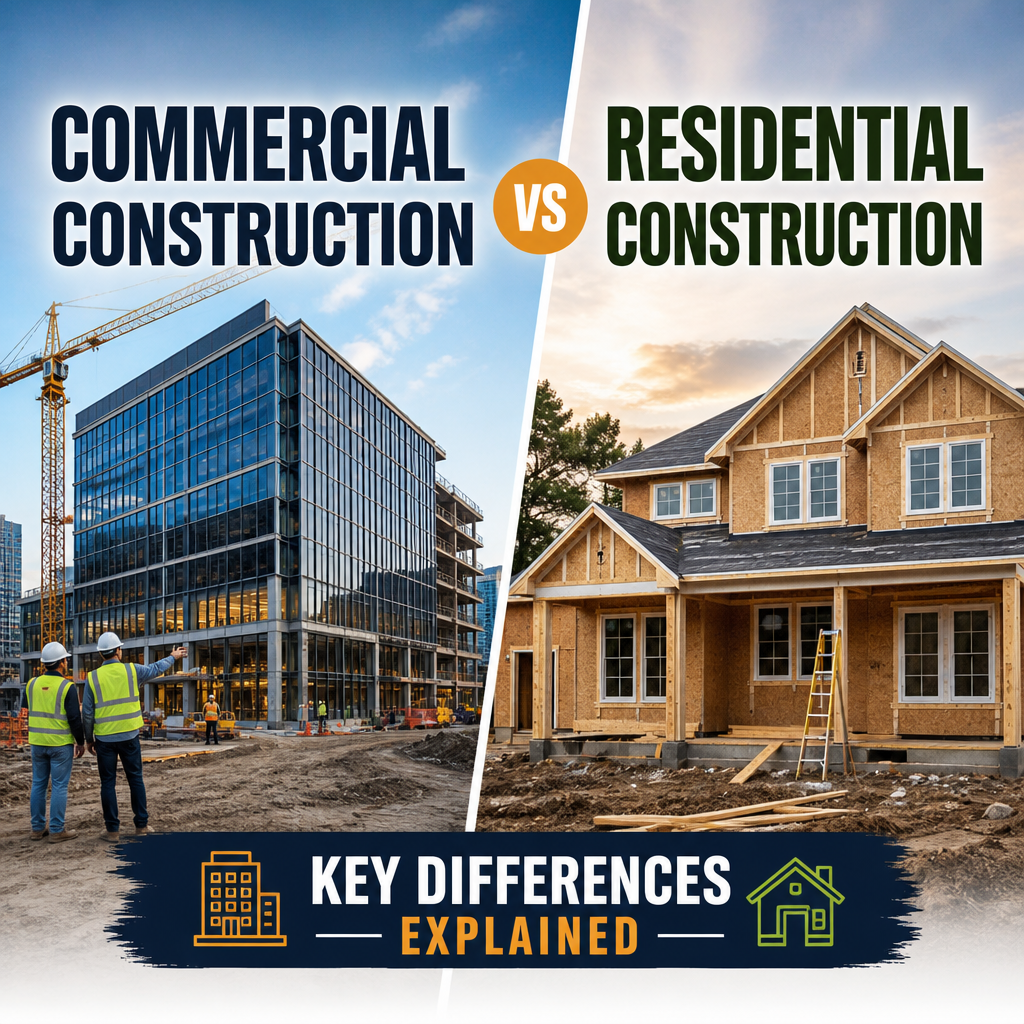
Commercial Construction vs Residential Construction: Key Differences Explained
Commercial Construction vs. Residential Construction: Key Differences
Construction projects may share the same basic goal—creating safe, functional buildings—but commercial construction and residential construction involve very different processes. From design requirements to project timelines, the two sectors demand distinct planning, expertise, and resources.
Understanding these differences can help property owners, developers, and contractors make better decisions before starting a project.
What Is Commercial Construction?
Commercial construction involves buildings designed for business, public, or industrial use. Common examples include:
- Office buildings
- Retail stores and shopping centers
- Restaurants and hotels
- Warehouses and factories
- Hospitals and schools
- Apartment complexes
These projects are often larger and more complex than typical home construction. They must accommodate employees, customers, equipment, and high levels of daily activity.
Commercial buildings also need to comply with detailed zoning rules, accessibility standards, fire safety regulations, and industry-specific requirements.
What Is Residential Construction?
Residential construction focuses on homes and living spaces. It includes:
- Single-family homes
- Townhouses
- Condominiums
- Apartment buildings
- Home additions and renovations
Residential projects are generally designed around comfort, privacy, and personal preferences. Although large housing developments can be complex, many residential projects have fewer systems and regulatory requirements than commercial buildings.
Homeowners may also have more flexibility when selecting layouts, finishes, fixtures, and materials.
Project Size and Complexity
One of the most noticeable differences between commercial construction vs residential construction is the scale of the project.
Commercial buildings often require larger foundations, stronger structural systems, advanced electrical networks, complex plumbing, elevators, and specialized heating and cooling equipment. A commercial project may also involve multiple floors and require coordination between numerous subcontractors.
Residential construction is typically smaller in scale. Even custom homes can include sophisticated features, but the overall structure and systems are usually less complicated than those found in commercial facilities.
Design and Building Requirements
Commercial projects must meet strict performance and safety standards. Designs may need to account for:
- Public accessibility
- Emergency exits and fire suppression
- Occupancy limits
- Energy efficiency
- Security systems
- Parking and traffic flow
- Specialized equipment
Architects and engineers often work closely with business owners, developers, inspectors, and government agencies throughout the process.
Residential design is usually more focused on lifestyle and appearance. Building codes still apply, but the approval process is often more straightforward, especially for standard single-family homes.
Materials and Construction Methods
Commercial construction commonly uses durable materials selected for heavy use and long-term performance. Steel, reinforced concrete, structural glass, and commercial-grade mechanical systems are frequently used.
These materials can withstand large numbers of occupants, equipment loads, and extended operating hours.
Residential construction often relies on wood framing, brick, vinyl siding, drywall, and other materials suited to smaller structures. While durability remains important, residential materials are frequently chosen for their appearance, cost, and ease of installation.
Timelines and Scheduling
Commercial projects usually take longer because they involve more planning, approvals, inspections, and construction phases. Delays can result from permitting issues, material shortages, design changes, or coordination problems between contractors.
A typical commercial project may follow several stages:
- Feasibility studies and site analysis
- Architectural and engineering design
- Permitting and approvals
- Site preparation
- Structural construction
- Installation of building systems
- Interior finishing
- Inspections and final handover
Residential projects can also experience delays, but smaller homes and renovations often have shorter schedules and fewer parties involved.
Cost and Financing
Commercial construction generally requires a larger investment because of the building’s size, specialized systems, labor requirements, and compliance obligations. Financing may involve investors, commercial lenders, developers, or corporate owners.
Residential construction costs vary widely based on location, size, materials, and customization. Homeowners may use mortgages, construction loans, savings, or renovation financing.
In both sectors, a detailed budget is essential. Unexpected changes, site conditions, and material price increases can affect the final cost.
Contractors and Project Management
Commercial construction often requires a general contractor to manage many specialized subcontractors, including electricians, plumbers, mechanical contractors, steel fabricators, and technology installers.
Project managers must coordinate schedules, budgets, safety procedures, inspections, and communication among numerous stakeholders.
Residential contractors may manage fewer teams, although large custom homes and housing developments can still require extensive coordination. Homeowners are also more likely to participate directly in design and finish selections.
Choosing the Right Construction Approach
The right construction approach depends on the building’s purpose, scale, budget, and regulatory requirements. Commercial projects demand specialized planning and experienced professionals familiar with complex codes and large-scale coordination. Residential projects typically offer greater flexibility and a more personal design process.
Recognizing the differences between commercial construction vs residential construction makes it easier to establish realistic expectations. With thorough planning, qualified contractors, and careful budget management, both types of projects can be completed efficiently and successfully.
